When you buy through links on our articles, Future and its syndication partners may earn a commission.

We've all had the thought — wouldn't it be nice if summer were just a little longer? Well, it might become a reality in the not-too-distant future. And, unfortunately, that's not a good sign for our planet.
According to a new study, climate change — primarily driven by human activities like burning coal for cheap power — could lengthen summers in Europe by 42 days by the year 2100. That's because the "latitudinal temperature gradient" (LTG), or the temperature difference between the North Pole and the equator, is currently decreasing. A higher LTG drives wind patterns across the Atlantic Ocean, bringing about seasonal temperature changes in Europe. With a lower LTG, summer weather patterns and heat waves will last longer across the continent.
"Our findings show this isn't just a modern phenomenon; it's a recurring feature of Earth’s climate system. But what's different now is the speed, cause and intensity of change," Dr. Laura Boyall, an author of the study, said in a statement."
To peer back into Earth's climate history in Europe, researchers analyzed layers of mud at the bottom of lakes. Deposited seasonally, these sediments paint a clear timeline of winters and summers as far back as 10,000 years ago.
Around 6,000 years ago, European summers were about eight months long due to natural fluctuations in the LTG. But now, the Arctic is warming up to four times faster than the global average, in part due to greenhouse gas emissions. For every degree Celsius the LTG decreases, European summers will grow by about six days. Thus, according to current climate projections, Europe will have 42 extra days of summer by 2100.
"Our research has uncovered that European seasons have been driven by the temperature gradient over thousands of years, which provides useful insight that can be used to help predict future changes more accurately," says Dr. Celia Martin-Puertas, lead researcher from Royal Holloway at the University of London. "The findings underscore how deeply connected Europe’s weather is to global climate dynamics and how understanding the past can help us navigate the challenges of a rapidly changing planet."
A study on the research was published on Nov. 19 in the journal Nature Communications.

A powerful geomagnetic storm created a series of brilliant auroras recently for observers across North America.

The images reveal the storm's incredible power and offer vital insights into how such hurricanes form.

This satellite image reveals not only geological beauty but also the deep ties between landscape, climate and history in one of the world's driest deserts.
LATEST POSTS
- 1
 The Best Traditional Music Arrangers in History
 - 2Polar bears are rewiring their own genetics to survive a warming climate
- 3Etymological Investigation Disclosed: A Survey of \Dominating New Tongues\ Language Learning Application
- 4How Would You Like to Deal with Your Funds?
- 5Top 20 Compelling Business Books for Progress


- Becoming Familiar with an Unknown dialect: My Language Learning Excursion
- Iranian missile hit on Ne'ot Hovav factory leads to fear of chemical leakage
- Over 1,800 killed since junta seized power in Burkina Faso, rights group says
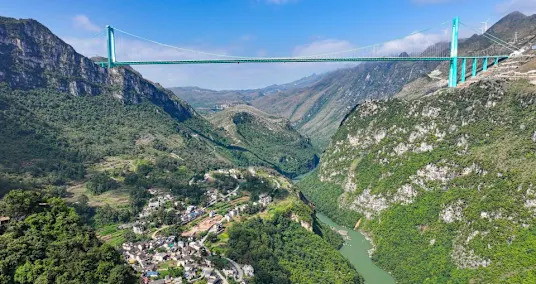
- World’s tallest bridge and biggest museum named ‘greatest places of 2026’
- A 3-limbed Kemp's ridley sea turtle is now being tracked at sea by satellite
- Fears of global aluminum shortages intensify
- Which European palace do you fantasy about visiting? Vote!
- 'The Real Housewives of Rhode Island' 1st teaser trailer unveiled: Which Bachelor Nation star is part of the cast? And when does it premiere?
- Will Comet C/2025 R3 (PanSTARRS) be the 'great comet' of 2026?